 EN
EN
 SW
SW

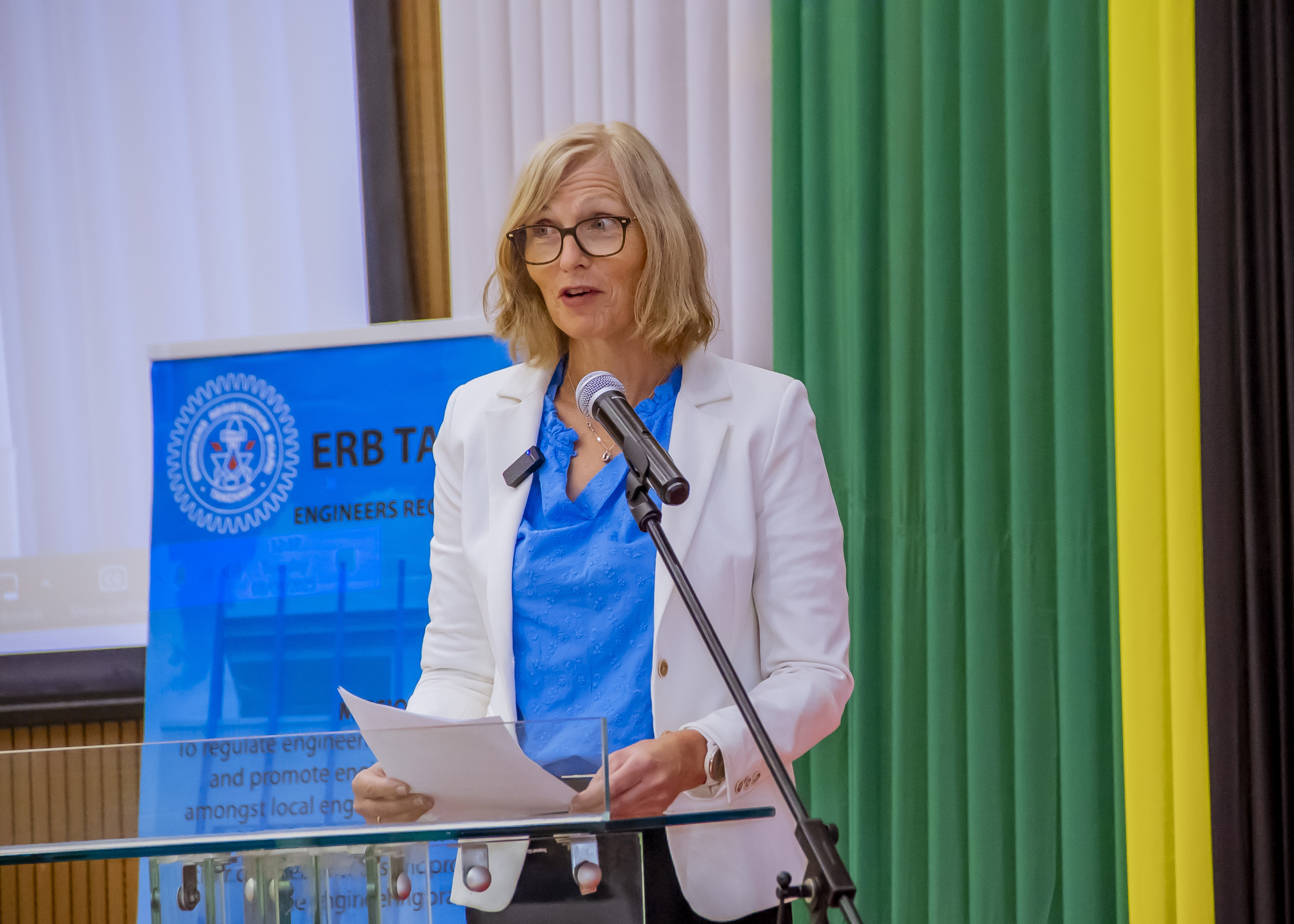
The Norwegian Ambassador to Tanzania, Ms Tonne Tinnes has highlighted from the Norwegian government side through the Royal Norwegian Embassy (RNE), they have consistently supported Structured Engineering Apprenticeship Programme (SEAP) for almost 15 years.
“But, I think I would like to say a few words about Norway, so that you understand why we did pick this kind of a project and why we are so proud of being a partner. Norway is very different from different, Tanzania is part of the global South and we are part of the global North,” she said.
Ambassador Ms Tinnes added that Norway is a small country located in Northern Europe a country, with a population the same size as the population in Dar es Salaam, so Norway it’s a really a small population may its less than Dar es Salaam with 5.5 million people.
“We have a long coast and I think that Norway has always used the natural resources that we have therefore, in that way we are quite similar to Tanzania and have started by using resources that we got from the fisheries, ships and we have a lot of hydropower. So a long time, Norway started to develop waterfalls into electricity, which marked the beginning of the country’s industrial development in our country and then we needed engineers,but did not have that money,” she said.
She said “Norway, just like Tanzania, I am informed that Tanzania had only 10 engineers in 1968 and I think this is when Norway started to develop hydro power we almost didn’t have any so we started to get them from the European countries”.
According to her, they have used that hydropower as an infant, they stared with fertilizers adding that she was not sure if anyone was aware about Yara a fertilizer company it also sale fertilizers.
“Eventually, we began offering oil and gas engineering programs at Norwegian universities. Today, we have our own engineers specialised in oil and gas, adding that this is why Norway has supported engineering education in Tanzania,” she said.
Around 1970, they discovered oil and they did needed qualified engineers so that had to get them from other countries so over time Norway then had universities, teaching that kind of engineering so Norway has now substantial oil and gas engineers and in petroleum field.
Ambassador Ms.Tinnes stressed that she aware that many of Tanzanian engineers received expertise from Norway some decades ago that gives an impression how important engineering has been vital develop the Norwegian government.
The ambassador further explained that when they started working in Tanzania they brought that competence in the country.
“If you were here in the 1960’s, 70’s and 80’s, I met the Norwegians they were engineers the here for power plants and number of oil and companies are operating in Tanzania. Also a Norwegian company to start a gas plant,” she said.
She noted that engineering has been a driving force behind Norway’s development. When Norway began working with Tanzania, they saw an opportunity to share this expertise and enthusiasm.
“The main reason we support this program is rooted in our national culture recognizing the critical role engineers play in a country’s development. The other reason is that for a country to move forward, it must fully utilize its natural resources,” she said.
Ambassador Ms.Tinnes further stressed the importance of gender equality in engineering. She noted that Norway has funded the SEAP program for 15 years female engineers in gaining practical training.
“We are doing this because Tanzania needs skilled engineers, and it also needs female engineers. We are aware that engineering is a male-dominated field, which is why we are working to increase the number of women in the profession,” she said.
She added that the increasing number of women joining the SEAP program is a great source of motivation. She thanked and congratulated all the women who have gone through the program, which is coordinated by the ERB.
“Make the most of the knowledge acquired to share your skills, support each other and build strong networks. That is the most effective way to thrive in a field traditionally dominated by men,” she said.
Ambassador Ms. Tonne Tinnes also encouraged male engineers to offer their support and cooperation to their female counterparts, helping them grow and succeed together in the profession.